by Communications Coordinator | Mar 27, 2026 | Uncategorized
Dear Students, Parents, Educators and Members of Staff,
As we draw closer to Holy Week and Easter, we wanted to reach out to you in a simple and heartfelt way.
We are living in uneasy times. Every day we are confronted with news of suffering, from all across the globe, and particularly in places like the Middle East and Ukraine. So much pain, so much uncertainty. And truth be told, it can sometimes feel overwhelming, until it becomes distant, even. It’s easy—without realising it—to grow used to it all, to become a little numb, and to carry on with our lives as though what is happening in the world does not really concern us.A
Yet, as a Jesuit college, we try very hard to resist this numbing feeling. We want to remain a community that sees, that feels, and that cares.
Holy Week gently invites us to stop and to look again at Jesus. Not as a powerful figure imposing himself on others, but a humble man who walks with people, who suffers with them, and who gives himself completely,out of love.
“He humbled himself, becoming obedient to death—even death on a cross.” (Philippians 2:8)
In Him we are reminded that it is not power or success that ultimately wins, but humility, love, and self-giving. Values that can seem fragile in today’s world, yet they are in fact the strongest of all.
And then comes Easter.
“The light shines in the darkness, and the darkness has not overcome it.” (John 1:5)
This is the quiet but powerful truth we hold onto: that even in the darkest moments, light is already present and at work.
In our Ignatian way of proceeding, we often speak of being men and women for others. But perhaps, especially in these times, we are also being invited to be with others—to stand close to those who suffer, not from a distance, but with compassion, with prayer, and with whatever small gestures we can offer.
“Rejoice with those who rejoice; weep with those who weep.” (Romans 12:15)
We cannot ignore the sorrow of the world, but neither should we lose hope. Easter teaches us to hold these two together—to carry compassion in our hearts while still believing deeply in the possibility of new life.
As a College community, this is what we hope to nurture every day: hearts that are attentive, people who are kind, and a way of living that reflects what we truly believe. Not perfectly, but sincerely.
May this Easter be a moment for each of us to pause, to reconnect with what truly matters, and to allow the Lord to renew in us a deeper sense of faith, hope, and love.
Be assured of our prayers for you and your families.
Wishing you a peaceful Holy Week and a truly blessed Easter.
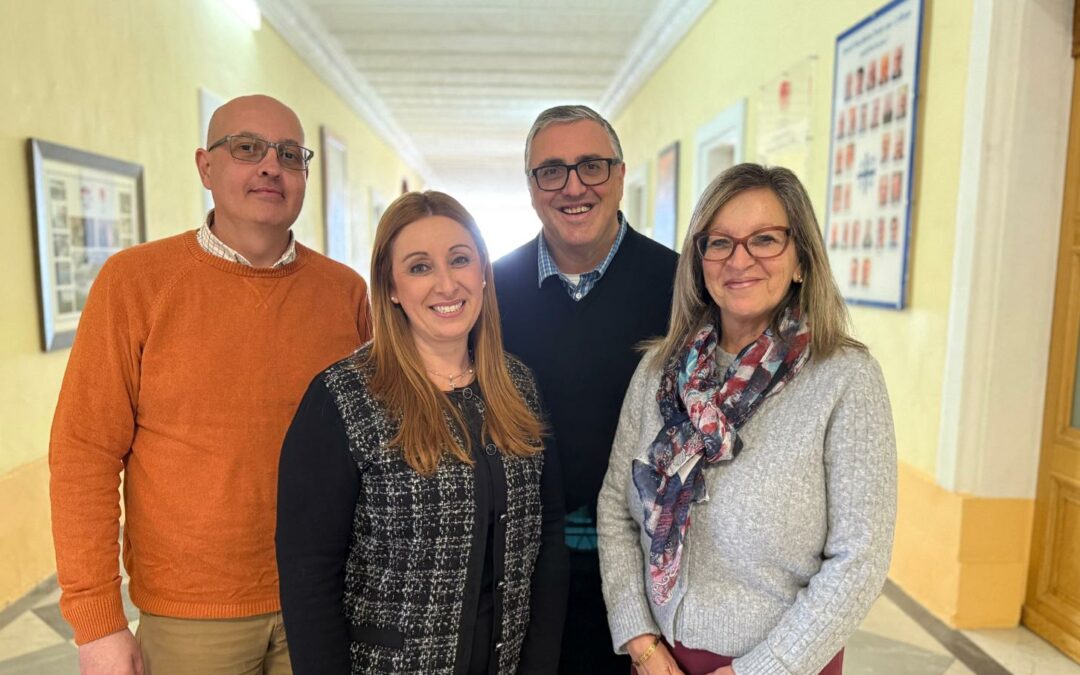
Fr Michael Bugeja sj Ms D.Camilleri Sacco Mr E.Ungaro Ms G.Abela
Chairperson Head of Primary Head of Secondary Head of Sixth Form
by Communications Coordinator | Mar 26, 2026 | Uncategorized
As part of his participation in the Young Reporters for the Environment (YRE) competition, Julian Agius Scicluna explored the issue of food scarcity and food security. His article highlights how hunger is not caused by a lack of food globally, but by unequal distribution, conflict, climate change, and food waste. He also explains how global events such as the war in Ukraine affect food supply chains and make achieving the UN Sustainable Development Goals, especially Zero Hunger, more challenging. Julian emphasises the important role of international organisations and the need for greater awareness and action to ensure a more sustainable and food-secure future for all.
Food security is a problem that shouldn’t exist. The world has more than enough food, yet 673 million people still face this issue, with around 9 million dying from hunger. Food scarcity isn’t about producing more food; it is about allocating it correctly to those in need. It is about ensuring that people can consistently provide food for themselves, both the working class and those unable to work.
As the world changes, we constantly aim to become more connected. The rise in globalization and interconnectedness is key to this change; however, we seem to want everything while being unwilling to give anything up. In the last decade, foreign trade growth has become stagnant and less resilient than it was pre-COVID. In developing countries such as Nigeria, foreign trade has increased by 68%, largely due to its rich crude oil resources. However, these countries still face intense poverty, and up to 1,000,000 people have fled Nigeria in the last year alone. But why? Shouldn’t more resources lead to a better quality of life?
At the UN Summit of 2015, 17 Sustainable Development Goals (SDGs) were agreed upon by 193 UN member states. The initial target was to achieve these goals by the year 2030. These goals were based on sustainability and development that meets present needs while also protecting future generations. With that deadline approaching, seemingly achievable goals such as zero poverty and zero hunger now appear increasingly unrealistic. Although action has been taken, ongoing conflicts in regions such as Gaza, the Middle East, and Ukraine have made these goals harder than ever to reach. In these areas, there are little to no safety nets for food supply, leaving many people vulnerable to starvation.
The issue with food scarcity is that resources are unevenly distributed. Countries do not always have access to everything they need. Some may have an abundance of wheat, while others have access to fish. This interdependence increases the need for international trade. However, the ongoing war in Ukraine has disrupted this balance. Both Russia and Ukraine, which are major exporters of wheat, have faced setbacks in exporting. In addition, farmland has been severely damaged, weakening their economies. This example shows that food security relies heavily on global cooperation and stable trade agreements. As a result, many Europeans who were already struggling now face even harsher choices, such as choosing between housing and food.
Food scarcity is not only an international issue but also a local one. Many communities have weak self-sustaining systems, making them vulnerable to environmental threats such as unpredictable rainfall or drought. This heavy reliance on agriculture is one of the main reasons why such problems arise in regions like Africa. Without backup systems and emergency food supply chains, these communities remain highly vulnerable. Access to modern jobs is also essential, as a lack of opportunities can cause fragile economies to collapse under sudden changes.
In Europe and the wider Western world, large amounts of food are wasted. Each year, approximately 132 kg of food is wasted per person. This highlights the imbalance in global food systems, where some regions experience abundance while others lack basic necessities. Our scarcity is not caused by a lack of resources, but by poor management and insufficient regulation of food waste.
There is hope, however, through organizations such as the World Food Programme and the Food and Agriculture Organization. These organizations work to provide food to areas where supply chains have collapsed, while also educating communities on how to improve food security. A lack of education can leave individuals vulnerable during economic or environmental changes. Around 60–70% of people affected by food insecurity live in rural areas, where there is a strong dependence on agriculture. This makes them especially vulnerable to changing weather patterns. Organizations such as Heifer International help by teaching farmers essential skills to succeed in the commercial world, ensuring they have sustainable ways to provide food for themselves. This represents a key step forward in addressing food security issues.
by Communications Coordinator | Mar 26, 2026 | Secondary School news
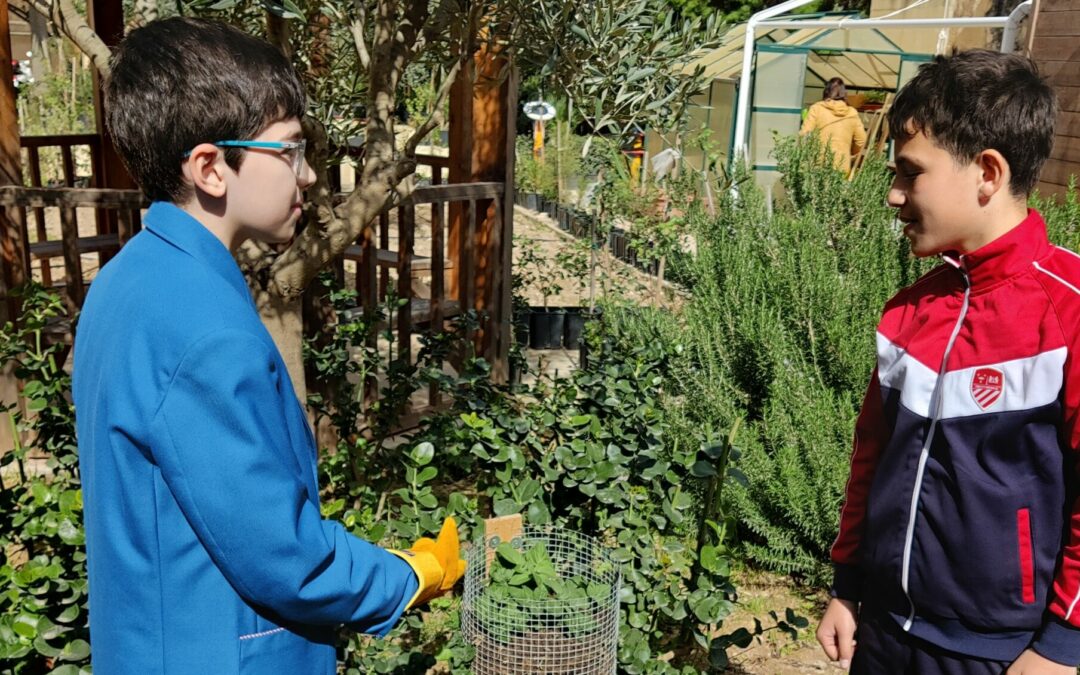
As part of our EkoSkola and LEAF project, Zack Spiteri (Class 2CC) wrote an article for the Young Reporters for the Environment (YRE) competition exploring food security in Malta and how innovative solutions like vertical farming in our school sensory garden can help small islands become more sustainable. His article highlights how young people can play an important role in building a greener and more secure future.
Before this year, I never really thought about where my food came from. Like many children in Malta, I grew up surrounded by warm meals and family gatherings where food felt constant and safe. I never questioned it. But through our EkoSkola and LEAF project, that feeling began to change. I started learning about food security, and at first it sounded like something only adults or scientists would talk about. The more I explored it, the more I realised that food security is simply about whether people will always have food to eat (FAO, 2019).
One fact that shocked me the most was that Malta imports nearly 80% of its food (Eurostat, 2023). That means most of what we eat comes from other, countries arriving by ship. Local reporting made this even clearer, explaining that “Malta imports 78% of its food, making the island extremely vulnerable to global supply shocks” (Times of Malta, 2023). Reading that made me stop and think. What if something goes wrong? What if global problems stop food from reaching us? Being a small island is beautiful, but it also makes us vulnerable. I also learned about climate change and how it is already affecting Malta. Hotter Summers, less rain, and drier soil are making farming harder (European Environment Agency, 2020). Farmers are facing less land, less water, and rising costs, and as one Maltese farmer said it clearly: “We are losing land faster than we can save it” (Times of Malta, 2022). That sentence stayed with me because it showed me that food does not simply appear in shops. It depends on nature and people working hard every day.Instead of feeling only worried, I became curious. I wanted to know what we, especially young people, could do. That is when our EkoSkola and LEAF project became truly meaningful because I didn’t just learn about problems, I explored solutions. One of the most exciting parts was experimenting with vertical farming, a way of growing plants upwards instead of across large fields.In our school we built our own vertical growing structure .We planted crops in layers and watched them grow, and seeing plants grow in such a small space made me realise how powerful this idea could be for a small island like Malta. Land here is limited and water is precious, so finding ways to grow more food with fewer resources is very important.
This experience completely changed the way I see food. Now when I sit at the table, I think about farmers working under the hot sun and ships crossing the sea to bring food to our island, but I also think about the possibilities we discovered in our school project. Vertical farming gave me hope because it showed that innovation can create solutions even in countries with limited space. We didn’t need large farms or perfect conditions, yet the plants still grew. For the first time, I understood that young people are not powerless. We are not just learning about the future, we are part of shaping it. Projects like EkoSkola and LEAF shows that education can inspire action and teach us that small steps matter, such as reducing food waste, supporting local farmers, and choosing local produce (NSO, 2022). These actions may seem simple, but together they can make a difference.I began imagining a greener Malta with rooftops full of plants, shops growing their own vegetables, and communities becoming more self-sufficient. Malta may be a small island, but small places can be used as laboratories. Big ideas, and innovation does not always come from big countries it sometimes starts in classrooms, with students who care enough to ask questions and try new things.
This project taught me something I will always remember: the future is not something we simply wait for, it is something we build. If young people continue learning about sustainability and sharing their ideas, Malta’s future does no have to feel fragile . It can be strong, green, and hopeful.After everything I have learned , I truly believe this is a small island which can still grow big solutions, and maybe one day, thanks to ideas that started in the shools like ours,Malta will not just depends on the world for food but will help grow its own future.
Referances
- (2023). Food import dependency data for Malta.
- European Environment Agency .(2020).Climate change impacts in Mediterranean regions.
- FAQ-Food and Agriculture Orgnization.(2019)Food security in small island states.
- National Statistics Office (NSO).(2022).Food waste statistics for Malta.
- Ekoskola Malta (2023).Sustainability education resources.
- LEAF –Linking Environment and Farming (2022).Sustainable farming and vertical agriculture education materials.
- Times of Malta (2022-2023).Articles on food imports ,farming challenges and rising food prices.

by Communications Coordinator | Mar 18, 2026 | Sixth Form News, Uncategorized
The Online Registrations for St Aloysius Sixth Form will be available online between Tuesday 25 August (00:00am) until Thursday 27 August noon. No applications will be accepted after the closing date and time.
The online registration link will only be open between Tuesday at 00:00am and Wednesday 12:00pm. The link will not be working BEFORE or AFTER that timeframe.
You will need to upload a copy of the following:
For further information you can phone 22793358.

Recent Comments